The Challenge: Electrification without overloading the grid
As public buildings across the United States accelerate electrification to meet decarbonization targets, domestic hot water is emerging as a major electrical challenge.
Conventional electric storage water heaters introduce large, uncontrolled demand spikes. These peaks often occur during occupied hours, placing strain on building electrical panels, transformers, and local distribution networks. For schools, hospitals and other public buildings, this can result in costly infrastructure upgrades, increased demand charges, and higher operational risk during peak periods.
In Springfield, Massachusetts, a public school, Liberty Elementary School, faced this exact challenge. The objective was clear: electrify hot water without triggering grid constraints or expensive electrical upgrades.
The question was not whether to electrify, but how to do it in a grid-friendly, future-ready way.
The solution: A side-by-side trial
To answer this question with real data, North American Sunamp distribution partner Lee Thermal conducted a controlled trial comparing two systems: a standard 80-gallon electric storage water heater and a Thermino 80 ePlus heat battery that stores heat in Sunamp’s proprietary Plentigrade® phase change material (PCM).
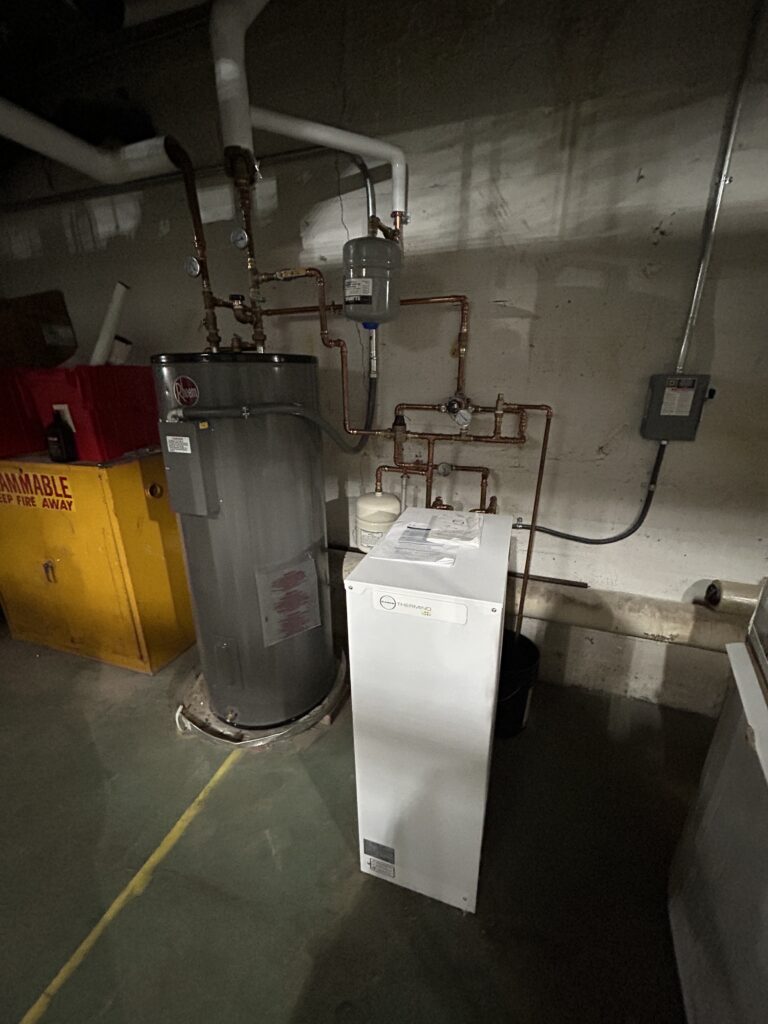
Both systems were monitored under real operating conditions in the school, with detailed electrical demand data collected over time. The goal was to understand not just energy consumption, but also how each system behaved from a grid and infrastructure perspective.
What the data revealed
vs.
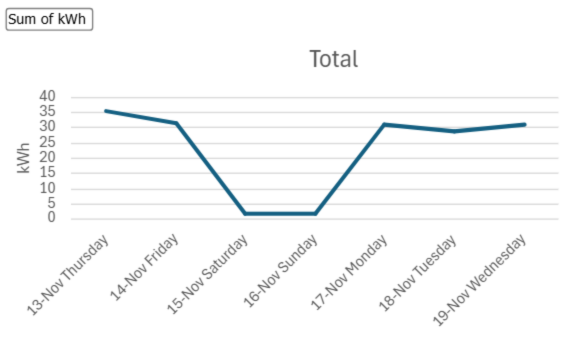
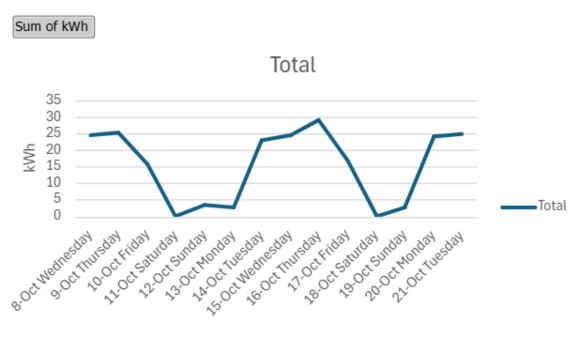
The data tells a compelling story: thermal storage is the missing piece of grid-ready electrification.
- Peak demand reduced by approximately 66%
One of the most significant outcomes was cutting the peak electrical demand by 66%.
- The electric tank peak demand: approximately 7.1 kW
- Sunamp Thermino peak demand: approximately 2.4 kW
This reduction translates directly into:
- Lower transformer & panel loading
- Reduced exposure to demand charges
- Lower risk of coincident peaks when multiple systems operate simultaneously
For facilities with limited electrical capacity, this difference can be the deciding factor in whether electrification can proceed without costly upgrades.
- A smoother, more predictable electrical load profile
Beyond peak demand, the shape of the electrical load also told an important story.
- The Thermino showed a smooth, stable charging profile with minimal variance.
- The electric tank showed repeated, sharp kW spikes throughout the day, particularly during school hours.
While the electric tank frequently operated in the 4 to 7 kW range, the Thermino rarely exceeded 2 to 3 kW.
This predictable behavior makes the Thermino inherently grid-friendly and easier to integrate into modern electrical designs.
- Fewer high-demand operating hours
Hourly demand analysis showed that the electric tank spent significantly more time operating at high electrical load zones. This amplifies stress on building infrastructure and the grid.
- Maintained lower demand across nearly all hours
- Dramatically reduced time spent at high electrical loads
- Minimized contribution to coincident building peaks
This matters not only for utilities but also for building owners planning future loads such as heat pumps or EV charging.
- Eliminating the Monday morning reheat penalty
A common issue with electric hot water systems is the Monday morning recovery spike. The electric tank exhibited a pronounced Monday morning reheat spike as the system worked hard to recover lost temperature after the weekend.
The Thermino system showed no such spike. Thanks to its high-density PCM thermal storage and ultra-low standby losses, stored heat was retained over the weekend without requiring aggressive reheat cycles.
This eliminated one of the most common, costly, and uncontrolled demand events in commercial buildings.
The bigger picture: Grid-ready electrification
The performance of the Thermino heat battery in this trial highlights a fundamentally different approach to electric hot water:
- Grid-friendly, low-volatility demand
- Reduced coincident peaks across multiple installations
- Optimized operation alongside heat pumps, EV chargers, and other electrified systems
In contrast, conventional electric tanks behave as grid-stressing assets, particularly when scaled across campuses or districts.
Results at a glance
The Springfield school trial delivered clear, measurable outcomes:
- Approximately 30% lower energy consumption
- Approximately 66% lower peak electrical demand
- Dramatically smoother electrical load profile
- Complete elimination of weekend reheat penalties
- Reduced utility costs and infrastructure stress
- Strong alignment with fully electrified building design