
Home > Knowledge hub > Blog > Organic vs inorganic PCMs
Organic vs inorganic phase change materials: what matters for thermal storage?
Organic and inorganic phase change materials have different properties and different engineering challenges. But the chemical classification alone does not tell you which PCM will perform better in a thermal storage product.
Organic or inorganic?
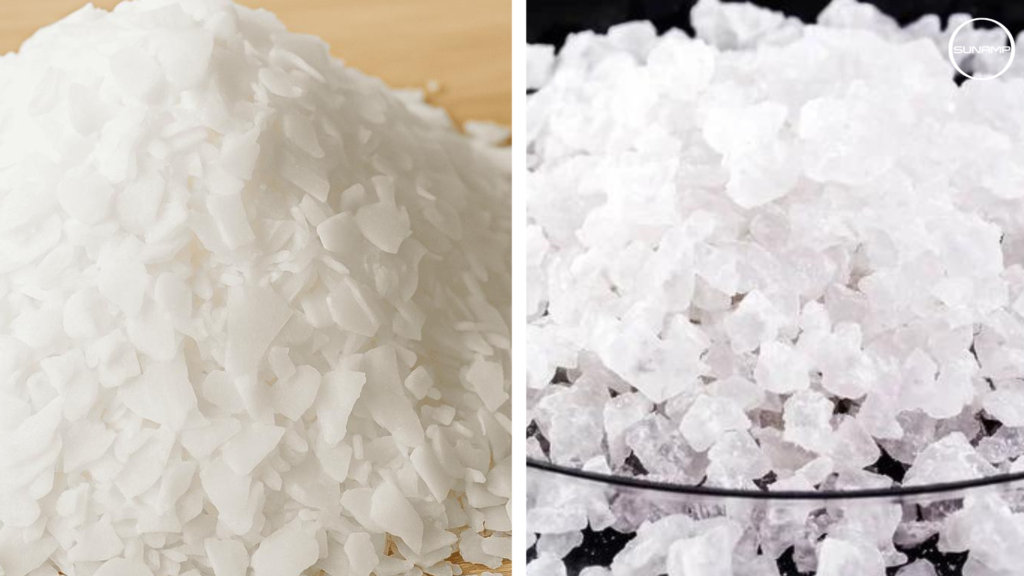
It is one of the first distinctions people encounter when comparing phase change materials (PCMs). Organic PCMs include materials such as paraffins, fatty acids, fatty alcohols and esters. Inorganic PCMs include salt hydrates, salts and metallic materials.
There are some useful general differences between the two.
Organic PCMs, including paraffins, fatty acids and fatty alcohols, are often described as chemically stable, relatively inexpensive and non-corrosive. However, these characteristics vary between individual materials, and often not true because exceptions are quite common. Many organic PCMs also have relatively low thermal conductivity and volumetric energy density, while combustibility can introduce additional safety considerations.
Salt hydrate PCMs can offer advantages in energy storage per unit volume and fire safety, although their thermal conductivity can still limit how quickly heat is transferred. Some formulations also experience supercooling, phase separation and materials compatibility challenges. These are important considerations, but again their severity depends on the particular PCM formulation.
For manufacturers developing thermal storage products, the challenge goes beyond choosing between organic and inorganic PCMs. It is also about navigating the conflicting claims and misconceptions often found in published information about these materials.
What are organic and inorganic phase change materials?
PCMs absorb and release thermal energy as they change phase, usually between solid and liquid. This allows significant quantities of heat to be stored around a relatively narrow temperature range (which is typically chosen based on the application).
Organic PCMs cover several groups of carbon-based materials. Paraffin waxes are among the most widely researched, alongside fatty acids, fatty alcohols, esters and other compounds.
Inorganic PCMs include salt hydrates, anhydrous salts and metallic materials. For the temperatures used in many heating, hot water and HVAC applications, salt hydrates are particularly relevant.
Researchers from Oak Ridge National Laboratory conducted a study comparing four classes of PCM for applications between 0°C and 65°C: inorganic salt hydrates, organic fatty acids, organic fatty alcohols and organic paraffin waxes. The study found considerable differences in latent heat, density, thermal conductivity, material cost and volumetric storage capacity between the groups.
The organic and inorganic classification provides a useful starting point, but it does not define every material’s suitability for thermal storage. More importantly, the classification should not rule a material in or out before its properties have been assessed. Certain factors, such as unacceptable toxicity, prohibitively high cost or incompatibility with a critical component of the heat battery, may make a PCM unsuitable for a particular application. Other challenges, however, may be addressed through PCM formulation and system design.
Does ‘organic’ mean more sustainable?
The word ‘organic’ can be misleading when discussing the sustainability of phase change materials.
In chemistry, it is a classification of compounds, not an environmental certification. Some organic PCMs, including conventional paraffins, are produced from petroleum-derived raw materials, while others can be manufactured using plant oils, fatty acids and natural waxes.
But the environmental impact of a PCM depends on more than the source of its raw materials.
A 2025 review published in Polymers (Sustainable Organic Phase Change Materials for Sustainable Energy Efficiency Solutions – PMC) highlights earlier lifecycle assessment (LCA) work comparing paraffin, salt hydrates and esters. Another building-focused LCA found that using salt hydrate and ester PCMs reduced overall environmental impact by around 9% and 10.5%, respectively, compared with paraffin. Environmental impacts can vary considerably between individual salt hydrates depending on their chemical composition and manufacturing processes. This is why the embodied carbon of inorganic PCMs needs to be assessed on a material-by-material basis rather than assuming all salt-based PCMs have a similar impact.
Even bio-based materials can have environmental impacts associated with cultivation, land use, processing and manufacturing. Equally, inorganic PCMs can have very different environmental footprints depending on the salts used and how they are produced.
A recent review covering advances in bio-based PCMs between 2022 and 2025 found considerable potential; however, there do exist challenges around thermal conductivity, leakage, durability and commercial scale deployment. In general, there is the trade-off between cost and purity. Lower-cost bio-based raw materials can contain impurities or vary in composition, which may affect their phase change behaviour and energy storage performance. Producing a material with the purity and consistency required for reliable thermal storage can involve additional processing, increasing costs.
The important distinction is therefore that organic and bio-based PCMs are not interchangeable terms, and neither classification guarantees better environmental or thermal performance.
Similarly, describing a PCM as inorganic does not tell you its complete environmental impact.
How do organic and inorganic PCMs differ when storing heat?
One important difference between many organic and inorganic PCMs is thermal conductivity, which determines how readily heat moves through a material. Many organic PCMs have relatively low thermal conductivity (~0.2 W/mK). Heat therefore moves through the material comparatively slowly unless the thermal store is engineered to compensate for it.
The latest research continues to identify low thermal conductivity as an important limitation for many organic PCMs, while inorganic materials such as salt hydrates generally offer higher conductivity and greater volumetric storage density.
For building a thermal battery though, storing heat is one piece of the challenge. The system also has to move heat into and out of the PCM at the rate the application requires (say a quick hot water draw for industrial CIP application). An organic PCM may therefore require more heat exchanger surface area, conductive structures, additives or other ways of increasing the rate of heat transfer. However, these approaches can add material, complexity and cost to the finished product.
The way energy density is measured matters too. Latent heat is often expressed per kilogram (kJ/kg), which tells us how much heat a PCM can store for its mass. But in a real product, space is often the constraint. A lower density material can have high latent heat per kg while storing considerably less energy within the same physical volume.
This is why volumetric energy density, i.e. how much energy can be stored per litre or cubic metre, is particularly important for compact thermal storage.
Oak Ridge National Laboratory found that the salt hydrates it assessed provided around 50–130 kWh/m³ of volumetric storage capacity, compared with 32–80 kWh/m³ for fatty acids and 43–55 kWh/m³ for fatty alcohols. The difference comes from the combination of latent heat and material density.
For a manufacturer trying to fit thermal storage within a heat pump, appliance or compact HVAC product, volumetric energy density matters more than energy per kilogram, and it also gives better heat loss performance. This is one reason that comparing PCMs purely on headline latent heat figures can be misleading.
What about supercooling in salt hydrate PCMs?
Supercooling is one of the most common challenges associated with salt hydrates.
It is an important issue, however saying ‘salt hydrates supercool’ should not be an absolute statement.
PCM formulations can use nucleating agents and other techniques to encourage crystallisation at the required temperature. Composition, operating conditions and the design of the thermal store can all affect nucleation behaviour.
Recent reviews of salt hydrate thermal storage continue to identify supercooling and phase separation as important challenges, while also documenting approaches including nucleating agents, stabilisation, encapsulation and other material modifications designed to address them. However, nucleation itself is only part of energy release. A PCM can begin crystallising at the required temperature but still release energy too slowly if crystal growth is poor. We have investigated this – nucleation, crystal growth and other selection criteria – in more detail in our guide to choosing the right phase change material for thermal storage.
Are organic PCMs easier to work with?
Some organic materials avoid the phase-separation behaviour associated with certain salt hydrate formulations and can show good cycling stability. They bring different considerations instead, like relatively low thermal conductivity, lower density, flammability for some materials, volume change, and compatibility with other materials within the system. Materials compatibility is particularly important because it is sometimes simplified into ‘salt hydrates are corrosive, while organic PCMs are compatible’. Building actual products is more complicated.
A 2026 Journal of Energy Storage study examined four commonly used plastics after exposure to inorganic, organic and bio-based PCMs over 112 days of thermal cycling. The researchers found that the greatest increases in mass occurred in certain plastics exposed to organic PCMs. A mass increase can indicate that the PCM has penetrated the polymer structure, while a decrease can indicate that components of the plastic have leached out. Both can affect the plastic’s mechanical properties and potentially increase the risk of leakage. In this study, further testing of plastics exposed to one organic PCM also found reduced stiffness.
A more compelling question worth asking is: Is this specific PCM compatible with the specific metals, polymers, seals, coatings and other materials used in the thermal storage product?
Are salt hydrates inherently unstable?
Some salt hydrates can experience phase separation during repeated melting and crystallisation. Different hydrate forms can crystallise, components can separate and the material may stop returning consistently to its original homogeneous state. It is one of the reasons salt hydrates have sometimes acquired a reputation for poor cycling performance. But once again, there is a danger in treating the behaviour of a material family as the behaviour of every formulation.
Composition, water content, nucleation, additives, containment and operating conditions can all affect how a salt hydrate performs over repeated cycles.
Sunamp’s Plentigrade® P58, for example, is based on sodium acetate trihydrate, a salt hydrate also familiar from reusable hand warmers. However, the underlying sodium acetate trihydrate material is not the finished PCM formulation. Turning this material into a working PCM formulation has involved developing the formulation chemistry for repeatable thermal storage use, alongside engineering the heat exchanger, containment and wider system around it.
You can read more about this in what makes Sunamp’s PCM world-leading.
What about bio-based organic PCMs?
Research into bio-based PCMs has explored alternatives to conventional petroleum-derived organic materials, although these alternatives face their own challenges around performance, material consistency and commercial viability.
Recent work has explored materials derived from fats, vegetable oils, bio-waxes, biomass and waste streams as alternatives to conventional petroleum-derived organic PCMs.
But moving from an interesting material to a ‘commercial thermal storage’ product requires more. Recent research continues to highlight thermal conductivity, leakage, oxidation stability, long-term durability, cyclability, manufacturing scale and cost as areas requiring further development.
A 2026 review published in Renewable and Sustainable Energy Reviews examined bio-based, shape-stabilised PCMs developed using agricultural waste-derived materials. It identified limited system-level validation and insufficient assessment of environmental impacts as challenges to their wider commercial application.
That is useful context for manufacturers
A material can have an attractive sustainability story and still require considerable chemical and engineering work before it is suitable for a long-life commercial thermal storage product. Also, an established material should not be selected simply because it is already commercially available.
In both cases, the same question applies: does the PCM meet the requirements of the application?
“There are always caveats when you make broad statements about one PCM family versus another. What matters is the properties of the material and whether they can deliver what the final thermal storage product actually needs.”
Dr Kate Fisher, head of materials, Sunamp
Organic vs inorganic PCM: start with the application
For manufacturers developing compact thermal storage products, inorganic salt hydrate PCMs can offer significant practical advantages over many conventional organic alternatives. Their high volumetric energy density allows more energy to be stored within a limited space, while comparatively better thermal conductivity can support heat transfer within the system.
Fire safety is another important distinction. Many conventional organic PCMs, particularly paraffin-based materials, are combustible, whereas salt hydrate PCMs are generally non-combustible. This can give salt hydrates an advantage in applications where reducing combustible materials is a priority, without requiring additional measures specifically to address PCM combustibility.
Organic PCM 30g hexadecanol vs 30g Plentigrade P58: Combustibility test
While some inorganic PCMs present challenges such as supercooling and phase separation, these can often be addressed through careful formulation and system design. By comparison, certain limitations of organic PCMs, such as low density and combustibility, can be more difficult to overcome without introducing additional materials, complexity or cost into the finished product.
For manufacturers, the selection process therefore needs to consider more than the organic or inorganic classification. What matters is how the PCM’s properties, operating temperature, energy density, heat transfer, compatibility and reliability come together within the overall system design.
Sunamp’s Plentigrade thermal storage platform brings together PCM chemistry, heat exchanger engineering, product design, validation and manufacturing expertise to develop thermal storage around the requirements of the application.